I walk into the classroom to pull out my 1st grade student. I call out his name, wave, and smile. He rolls his eyes and ever-so-slowly pushes back his chair to stand up. If I didn’t know better, I’d think he was heading to a funeral or an execution, not a tutoring session. Shoulders slumped and head down, he shuffles over to the door.
Once we’re out in the hall, he puts his hands on his hips and glares up at me.
“I’m mad at you,” he says.
“Why is that?” I ask.
“Because you don’t let me do whatever I want!” Satisfied with his zinger, he clambers up the stairs on all fours to head to the reading room for literacy tutoring.

Picture by Ryan Franco from Unsplash
When I left the world of customer service to begin working in schools, I made the greatest miscalculation of my life. I thought that outbursts from children would be easier to deal with than outbursts from adults. My logic was that a child with behavior problems presents an opportunity for learning, growth, and change; while an adult’s tendencies are more “fixed”. I had yet to realize that a child’s moral development, as theorized by Lawrence Kohlberg, also plays a role. A child at a pre-conventional level of development may truly believe that they are entitled to do “whatever they want.” Any other outcome is morally unjust!
Cue a school-year full of unsuccessful attempts to deal with student behaviors ranging from shouting, swearing, and throwing things to bullying, violence, and everything in between. I was in over my head!

Photo by Ian Espinosa on Unsplash
But I wasn’t alone. In one middle school class where I subbed, I saw that the sub from the day before (who shall remain anonymous) had written the following note:
Today was not the students’ best day! I would liken it to being in the middle of a wolf pack, where each hour is just slightly more ravenous than the previous. Even glorifying the few students actively participating backfired, and they started being picked on. I would almost say these students are ruthless in their desire not to learn. Spring fever is an understatement.
Anonymous

Photo by Jamie Haughton on Unsplash
Most students are not ravenous wolves all the time. How do we manage classrooms and create a safe learning environment that tames the beasts and brings out the best in students? I think that one factor is attitude. Seeing the students as a wolf pack is a great way to set yourself up for failure.

Photo by Judi Neumeyer on Unsplash
Over the course of the school-year, different schools and classrooms each had their own system of incentives and consequences in place for behavior management. And every teacher I talked to had a different idea of how a classroom should be run. What surprised me was the number of teachers who used punishment as a tactic (predominantly either by yelling at students or kicking them out of the classroom).
I couldn’t help but wonder… Is this the best way?
And so began my quest to learn about behavioral psychology and its applications in the classroom. More importantly, how can strategies such as positive behavior support and restorative justice be used to simultaneously improve classroom behavior and support student well-being?
Behavioral Psychology
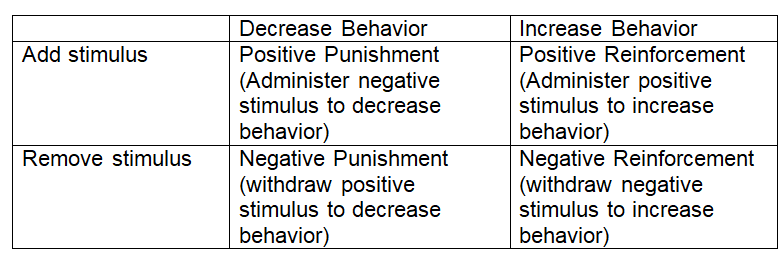
Working in a classroom, there are some behaviors that I want to see more often in my students, such as hand-raising, kind words, and active listening. But there are other behaviors that I want to see less often, such as violence, chair-throwing, and climbing out the window. According to B.F. Skinner, you can reinforce a desirable behavior by administering a positive stimulus (a reward) when that behavior occurs. Alternatively, you can decrease an undesirable behavior by punishing it (administering a negative stimulus).
For example, if you give a sticker to a student who raises their hand, they’ll be more likely to raise their hand in the future. If you scold a student who interrupts, they’ll be less likely to interrupt in the future. You can also do negative reinforcement by withdrawing a negative stimulus (no homework today because you were so well-behaved!) and negative punishment by withdrawing a positive stimulus (you don’t get free time today because you were standing on the teacher’s desk!).

Photo by Mert Guller from Unsplash

Photo by Matthew Henry from Unsplash
Here’s a chart I made for all you visual learners:
Seems simple, right?
If it were that easy, then we’d be able to solve all the world’s problems by handing out stickers and assigning time-outs. Unfortunately, operant conditioning has some limitations. For example, within a classroom, numerous stimuli besides those presented by the teacher can serve to reinforce or punish a behavior. What if a student says something inappropriate, and the whole class laughs and applauds? Or what if a student gives the right answer and then gets teased by their classmates? Not to mention that behaviorism doesn’t account for hereditary and cognitive factors (McLeod, 2018).
Cherry (2019) explained how punishment in particular has several drawbacks. The behavior changes resulting from punishment are often only temporary, and punishment is ineffective if it isn’t consistently applied. Punishment also doesn’t provide any indication of what a proper alternative behavior would be. It’s a lot harder to stop eating greasy foods if you don’t have anything healthy to replace them with.
Digging deeper
Although behaviorism has its limitations, the world is filled with resources to help us learn about other ways to manage our classrooms. Consider this long list of behavior management resources from Edutopia. Even Dwayne the Rock Johnson has tips!
In addition, there are small steps we can take to minimize the chaos in our classrooms and make them into safe, productive spaces. Mulvahill emphasizes the benefits of having a strong classroom management plan with consistent, reliable routines. She also describes the importance of building relationships:
Get to know your students. What are their strengths? Their challenges? What are they really into? Investing in them as individuals builds trust, and that is the key to successful classroom management. Integrate social-emotional learning into your day. Teaching your students social-emotional skills builds a cohesive classroom community
Mulvahill, 2018
Two practices that I really want to highlight are Positive Behavioral Interventions and Support and Restorative Justice. Since these are both school- or district wide programs, you might not be able to officially implement them in your classroom without administrative support. However, both have individual elements that would be fantastic to incorporate.
Positive behavioral Interventions and Support
Lee states that Positive Behavioral Interventions and Support (PBIS) is based on educating students about good behavior. This makes expectations clear so that students are more easily able to meet them. This schoolwide system of shared expectations is intended to prevent rather than correct behavior issues. For students who do have behavior problems, the school works to create strategies so that those behaviors aren’t repeated. Evidence-based interventions are used for children who continue to experience problems. As explained by Lee, “In PBIS, schools still use discipline, but punishment isn’t the focus. The focus is on teaching expectations and preventing problems” (2019). More information about PBIS can be found here courtesy of Understood or here at the website for the Technical Assistance Center for PBIS.
Restorative justice
Another strategy that all the bees are buzzing about is restorative justice. With an emphasis on relationships and community, this strategy is based on encouraging students to take responsibility for their actions, mediate conflicts, and make amends to anyone harmed by their actions. Using this approach instead of a traditional punitive approach can have a major impact. For example, one school district saw their suspensions decrease by 87% over three years after implementing a restorative justice program (We Are Teachers, 2019).
You can learn more about restorative practice by either reading this article or watching this video.

Prevalence of Punitive Strategies
One of the biggest problems with using punishment as a behavior modification strategy is that school disciplinary policies are contributing the to the school-to-prison pipeline. So with options such as positive reinforcement, positive behavior support, and restorative justice at our disposal, why do punishment and discipline still persist in our nation’s schools? Why do so many teachers resort to these strategies?
As a closing thought, I’d like to reflect on the 1989 film Lean on Me. In the film, the principal played by Morgan Freeman was portrayed as an inspiration—but he carried a baseball bat and a bullhorn, expelled hundreds of students, and put chains on school doors, among other things. Would this film be as well-received in 2019, 30 years after its original release? Do you think that punitive, zero-tolerance policies are justified in a school district facing extreme challenges?
Also comment and share your own behavior management strategies! How do you encourage students to make responsible choices?
Each week we have new guest bloggers, follow us to stay in the loop – just click the follow button on the lower righthand side.
References:
Cherry, K (6 May 2019). Punishment in Psychology: How Punishment Can Be Used to Influence Behavior. Retrieved from https://www.verywellmind.com/what-is-punishment-2795413.
Lee, A.M. (2019). PBIS: What You Need to Know. Retrieved from https://www.understood.org/en/learning-attention-issues/treatments-approaches/educational-strategies/pbis-how-schools-support-positive-behavior.
Maxime, F. (2018, January 18). Zero-Tolerance Policies and the School to Prison Pipeline. Retrieved from http://www.sharedjustice.org/domestic-justice/2017/12/21/zero-tolerance-policies-and-the-school-to-prison-pipeline.
McLeod, S. (2013). Kohlberg’s Stages of Moral Development. Retrieved from https://www.simplypsychology.org/kohlberg.html.
McLeod, S. (2018). Skinner – Operant Conditioning. Retrieved from https://www.simplypsychology.org/operant-conditioning.html.
Mulvahill, E. (2018, February 12). What Is Classroom Management? Retrieved from https://www.weareteachers.com/what-is-classroom-management/.
We Are Teachers. (2019, January 15). What Teachers Need to Know About Restorative Justice. Retrieved from https://www.weareteachers.com/restorative-justice/.
 summeredublog